
Winners talk: Gomorrah – The Origins goes back to the beginning of Naples’ underworld
At the 65th Monte-Carlo Television Festival this week Italian series Gomorrah – The Origins won the Golden Nymph award for Best Creation. TVBIZZ spoke with the creative team behind the highly anticipated prequel to one of Italy’s most successful crime franchises. Joining the roundtable were producers Giulia Forgione and Riccardo Tozzi, President of Cattleya, alongside actors Luca Lubrano and Francesco Pellegrino, who portray young versions of characters in the series.
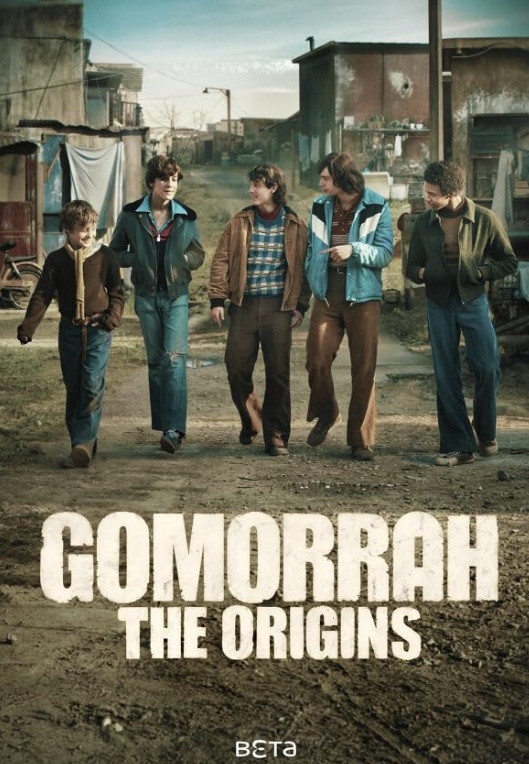
Produced by Italy’s leading drama company Cattleya, part of ITV Studios, Gomorrah – The Origins explores the formative years of Pietro Savastano and the criminal world of Naples in the late 1970s. The series is commissioned by Italian broadcaster Sky and streaming platform NOW, with international distribution handled by Beta Film. Directed by Marco D’Amore, who played Ciro Di Marzio in the original Gomorrah series, the drama revisits the social and criminal landscape that gave birth to the Camorra empire depicted in the flagship show.
One of the first challenges for the production was language. While international audiences may associate Gomorrah with its distinctive Neapolitan dialog, the prequel required the cast to recreate an even older version of the dialect.
“I'm from Naples but the dialect changed through the years,” explained Pellegrino. According to the actor, the cast spent a month working together with D'Amore to understand the language and culture of the era.
“We studied slangs, words different from Neapolitan,” he said. “Me and all the cast, we had one month of lap with Marco D'Amore. It was a magical moment, all together like finding our character in that language.”
Unlike many contemporary productions, the actors did not rely on professional dialect coaches.
“We didn't request to production coach for Neapolitan, because we have a grandma and we have family that still talks about that kind of language,” Pellegrino said. “Marco is also a wonderful director who gives you the opportunity to study with him.”
Lubrano, who is himself Neapolitan, said authenticity came naturally but still required adapting to the specific period.
“There wasn't any need for a coach, actually, because I'm Neapolitan, so I know how to speak Neapolitan,” he said. “Although the Neapolitan used in this series is the one dating back to the 1970s. So, it's not like contemporary Neapolitan, it's slightly different.”
The production team also invested heavily in recreating Naples as it existed nearly fifty years ago. Forgione explained that the writers adopted an almost journalistic approach to research.
“The writers just go a lot to Naples to do research, because they use a journalistic approach to write,” she said. “They met lots of consultants that can tell them small stories or small anecdotes about all the stories of that period of time.”
Beyond books and historical records, the creative team relied on local testimony to capture the atmosphere of the era.
“They study books, they study history, because of course there are lots of articles of that period, but also statistics and books written about that period,” Forgione noted. “Everybody, all the heads of department, and the writers, and the directors, and us as creative producers just made lots of research just to give back to the audience a real experience of what that period could be.”
She added that understanding the social context of Naples in 1977 was crucial.
“The climate was different, of course, it was not tied to drugs, but was still tied to cigarette smuggling,” Forgione explained. “So it was more grotesque in a certain way. That was really important for them, just to talk with people, and listen to their stories, to enter a little bit in the mood of 1977.”
Tozzi revealed that documentary material also played an important role in shaping the production’s vision.
“There was that series of documentaries,” he recalled. “It was a journalist who made an inquiry about the kids in Naples in those years. It was very useful, very important to all of us.”

Given the franchise’s close association with organized crime, one inevitable question was whether the producers worried about reactions from the real Camorra. Tozzi dismissed the idea, saying the criminal organizations appeared largely uninterested.
“I think the real Camorra was totally indifferent to the show, apparently,” he said. “No reaction, we didn't have any.”
However, he shared one extraordinary story from the original production's history. A former mobster who had become a writer and language consultant for the series once found himself unexpectedly dragged back into the orbit of organized crime.
“He was an ex-mob, was in jail, and recovered completely and became a writer,” Tozzi recalled. “And once, one day on the set, he was kidnapped.”
According to Tozzi, a local Camorra boss who had spent years in prison wanted the consultant to write a novel about his prison love story.
“He kidnapped him, to ask him to write this novel about his love story in jail,” Tozzi said. “This guy was very brilliant, managed to spend one day with him, and at the end go away, and come back to us.”
For the actors, portraying young members of the Camorra did not raise particular concerns, largely because the story is firmly rooted in history rather than contemporary criminal life.
“Our strongest point is that for us, it's a period already passed,” Pellegrino said. “It was already passed, like 50 years ago. So it's not about nowadays.”
Lubrano was even more direct when asked whether he had reservations about playing a criminal character. “Absolutely no concerns,” he said.
Based on the footage shown in Monte-Carlo and the passion displayed by its cast and producers, Gomorrah – The Origins aims to do more than simply extend a successful brand. By reconstructing the Naples of the late 1970s through language, history and lived experience, the series seeks to show how one of television's most iconic crime worlds was born long before viewers first met Pietro Savastano in Gomorrah.
One of the first challenges for the production was language. While international audiences may associate Gomorrah with its distinctive Neapolitan dialog, the prequel required the cast to recreate an even older version of the dialect.
“I'm from Naples but the dialect changed through the years,” explained Pellegrino. According to the actor, the cast spent a month working together with D'Amore to understand the language and culture of the era.
“We studied slangs, words different from Neapolitan,” he said. “Me and all the cast, we had one month of lap with Marco D'Amore. It was a magical moment, all together like finding our character in that language.”
Unlike many contemporary productions, the actors did not rely on professional dialect coaches.
“We didn't request to production coach for Neapolitan, because we have a grandma and we have family that still talks about that kind of language,” Pellegrino said. “Marco is also a wonderful director who gives you the opportunity to study with him.”
Lubrano, who is himself Neapolitan, said authenticity came naturally but still required adapting to the specific period.
“There wasn't any need for a coach, actually, because I'm Neapolitan, so I know how to speak Neapolitan,” he said. “Although the Neapolitan used in this series is the one dating back to the 1970s. So, it's not like contemporary Neapolitan, it's slightly different.”
The production team also invested heavily in recreating Naples as it existed nearly fifty years ago. Forgione explained that the writers adopted an almost journalistic approach to research.
“The writers just go a lot to Naples to do research, because they use a journalistic approach to write,” she said. “They met lots of consultants that can tell them small stories or small anecdotes about all the stories of that period of time.”
Beyond books and historical records, the creative team relied on local testimony to capture the atmosphere of the era.
“They study books, they study history, because of course there are lots of articles of that period, but also statistics and books written about that period,” Forgione noted. “Everybody, all the heads of department, and the writers, and the directors, and us as creative producers just made lots of research just to give back to the audience a real experience of what that period could be.”
She added that understanding the social context of Naples in 1977 was crucial.
“The climate was different, of course, it was not tied to drugs, but was still tied to cigarette smuggling,” Forgione explained. “So it was more grotesque in a certain way. That was really important for them, just to talk with people, and listen to their stories, to enter a little bit in the mood of 1977.”
Tozzi revealed that documentary material also played an important role in shaping the production’s vision.
“There was that series of documentaries,” he recalled. “It was a journalist who made an inquiry about the kids in Naples in those years. It was very useful, very important to all of us.”
Given the franchise’s close association with organized crime, one inevitable question was whether the producers worried about reactions from the real Camorra. Tozzi dismissed the idea, saying the criminal organizations appeared largely uninterested.
“I think the real Camorra was totally indifferent to the show, apparently,” he said. “No reaction, we didn't have any.”
However, he shared one extraordinary story from the original production's history. A former mobster who had become a writer and language consultant for the series once found himself unexpectedly dragged back into the orbit of organized crime.
“He was an ex-mob, was in jail, and recovered completely and became a writer,” Tozzi recalled. “And once, one day on the set, he was kidnapped.”
According to Tozzi, a local Camorra boss who had spent years in prison wanted the consultant to write a novel about his prison love story.
“He kidnapped him, to ask him to write this novel about his love story in jail,” Tozzi said. “This guy was very brilliant, managed to spend one day with him, and at the end go away, and come back to us.”
For the actors, portraying young members of the Camorra did not raise particular concerns, largely because the story is firmly rooted in history rather than contemporary criminal life.
“Our strongest point is that for us, it's a period already passed,” Pellegrino said. “It was already passed, like 50 years ago. So it's not about nowadays.”
Lubrano was even more direct when asked whether he had reservations about playing a criminal character. “Absolutely no concerns,” he said.
Based on the footage shown in Monte-Carlo and the passion displayed by its cast and producers, Gomorrah – The Origins aims to do more than simply extend a successful brand. By reconstructing the Naples of the late 1970s through language, history and lived experience, the series seeks to show how one of television's most iconic crime worlds was born long before viewers first met Pietro Savastano in Gomorrah.